Before the sixteenth century, the monasteries were the main source of support for the poor. They provided food, simple medical treatment and shelter for those who needed help. When the monasteries were dissolved by King Henry the Eighth, this support system came to an end. Under the later Elizabethan Poor Laws, responsibility for caring for the poor passed to the parish, which was required to raise money locally for their benefit.
Witney grew in wealth during this period due to the wool trade. As the town prospered, many small charities were established to help those in poverty. These charities often purchased houses or land and used the income from rent to provide assistance. Support offered by these early charities included food, often beef and bread, and shelter for older people, usually those over the age of fifty. There was also a workhouse, and in eighteen hundred and three it housed one hundred and eighteen people. The charities further supported the community by arranging apprenticeships, particularly in trades connected to weaving and blanket making, and by offering small loans to help people begin work in a trade.
By sixteen thirteen, the Charity Commissioners were finding it difficult to make sure that all trustees involved in these many small charities could be relied upon. They therefore decided to bring the charities together, and so the Witney Town Charities were formed.
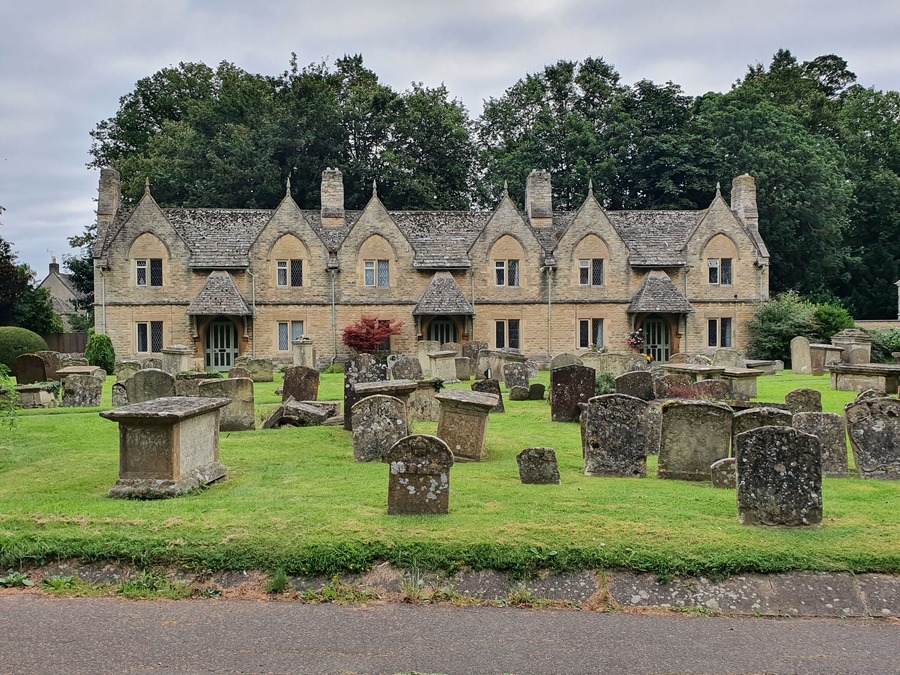
In nineteen thirty five, the non educational charities in Witney were reorganised into two groups. The Witney Parochial Charities and the Witney Town Charity, with the latter responsible for the almshouses. At that time the Witney Town Charity received six hundred and ten pounds a year. Of this, two hundred and seventy five pounds came from rents on property in Witney, one hundred and fifteen pounds came from land in Eynsham, Freeland, Hailey and Bampton, and two hundred and twenty pounds came from investments on funds valued at eight thousand pounds.
In nineteen fifty seven the charity agreed that, in addition to maintaining the almshouses, its income could be used to provide gifts of money, bedding, clothing, fuel and furniture. It also offered weekly allowances and grants to the sick and to those entering or working in a trade.
In nineteen seventy one, some of the charity’s land was sold and the proceeds were invested in the stock market. This decision has helped to secure the charity’s strong financial foundations today.
In the early two thousands, the Trustees decided to expand the charity’s work in supported living. As part of this commitment, Ovens House in Corn Street was developed, followed by the acquisition of thirty three Saxon Way and thirty three Wilkinson Place.
We offer our thanks to Julie Ann Godson and her book Witney, Weavers and Welfare, from which much of this history has been drawn. An abridged version of the book has been reproduced with kind permission of the author on our website here: Witney, Weavers and Welfare
A copy of the book may be borrowed from the charity, please send an email to witneytowncharity@gmail.com for details.